
October is National Physical Therapy Month — a great time to think about something we often take for granted: the ability to move through life the way we want to.
Physical therapy isn’t just for recovering from an injury, surgery, or illness. It can help people improve movement, build strength, manage pain, prevent injuries, maintain balance, and stay active throughout life.
That’s the idea behind this year’s PT for Future Me campaign from the American Physical Therapy Association (APTA): Think about the person you want to be in the future — and how physical therapy can help you get there.
Whether your future includes playing with your grandchildren, hiking a favorite trail, staying independent at home, managing a health condition, or simply being able to get through your everyday activities with greater confidence, movement matters.
Don’t Miss the Moments That Matter
Move better. Hurt less. Your grandkids need you now.
The moments that matter most aren’t always big ones.
They’re playing on the floor with a grandchild. Taking a walk with someone you love. Gardening. Traveling. Getting together with friends. Walking into your favorite restaurant. Getting out of bed and moving through your morning without worrying about whether your body will cooperate.
Physical therapy can help people address movement challenges that may stand between them and the things they want to do.
And you don’t have to wait until you’re unable to do something before asking whether PT could help.
Choose PT for a Stronger, Healthier You
Physical therapy can help prevent overuse injuries. Choose PT for a stronger, healthier you.
You don’t have to be a professional athlete to experience an overuse injury. Repetitive movements at work, during exercise, in sports, or even in everyday activities can place stress on the body.
Physical therapists can evaluate how you move and help identify ways to improve strength, flexibility, mobility, and movement patterns.
That can be especially valuable when you’re starting a new activity, increasing your level of exercise, returning to an activity after time away, or simply trying to stay active as you get older.
PT isn’t only about getting back to where you were. It can also be about helping you keep moving toward where you want to go.
Hike Farther. Live Bigger.
Hike farther, longer, and more worry-free. Choose PT so you can focus on the views, not the bathroom breaks.
Okay, that last part might get a laugh — but the idea behind it is serious.
Being active isn’t only about exercise. It’s about having the physical ability and confidence to participate in the experiences you enjoy.
Maybe that’s hiking. Maybe it’s traveling, golfing, fishing, gardening, dancing, playing with the kids, or walking around your favorite vacation destination.
Your goals are personal. Physical therapy can be, too.
A physical therapist can work with you to understand your individual challenges and develop a plan focused on the movements and activities that matter in your life.
Falls Are Not a Normal Part of Aging
Falls are not a normal part of aging.
Balance can change as we get older, but falling shouldn’t simply be accepted as an unavoidable part of getting older.
Changes in strength, balance, walking ability, vision, medications, the home environment, and other factors can affect fall risk.
Physical therapists can evaluate movement, strength, balance, gait, and functional mobility and help develop an individualized plan to address problems that may affect safety and independence.
And sometimes, the best place to do that assessment is at home.






Physical Therapy, Right Where Life Happens — At Home
For people receiving home health care, physical therapy doesn’t have to happen in a clinic.
It can happen right where life happens — at home.
Home-based physical therapy allows the therapist to see how a person actually moves through their everyday environment.
Can they safely get in and out of a chair? Navigate the stairs? Get in and out of bed? Move around the kitchen? Walk safely through the house? Use their walker or other assistive equipment correctly?
These real-life details can become an important part of an individualized therapy plan.
The goal isn’t simply to complete an exercise program. It’s to help people improve their ability to function in their own homes and participate in their own lives.
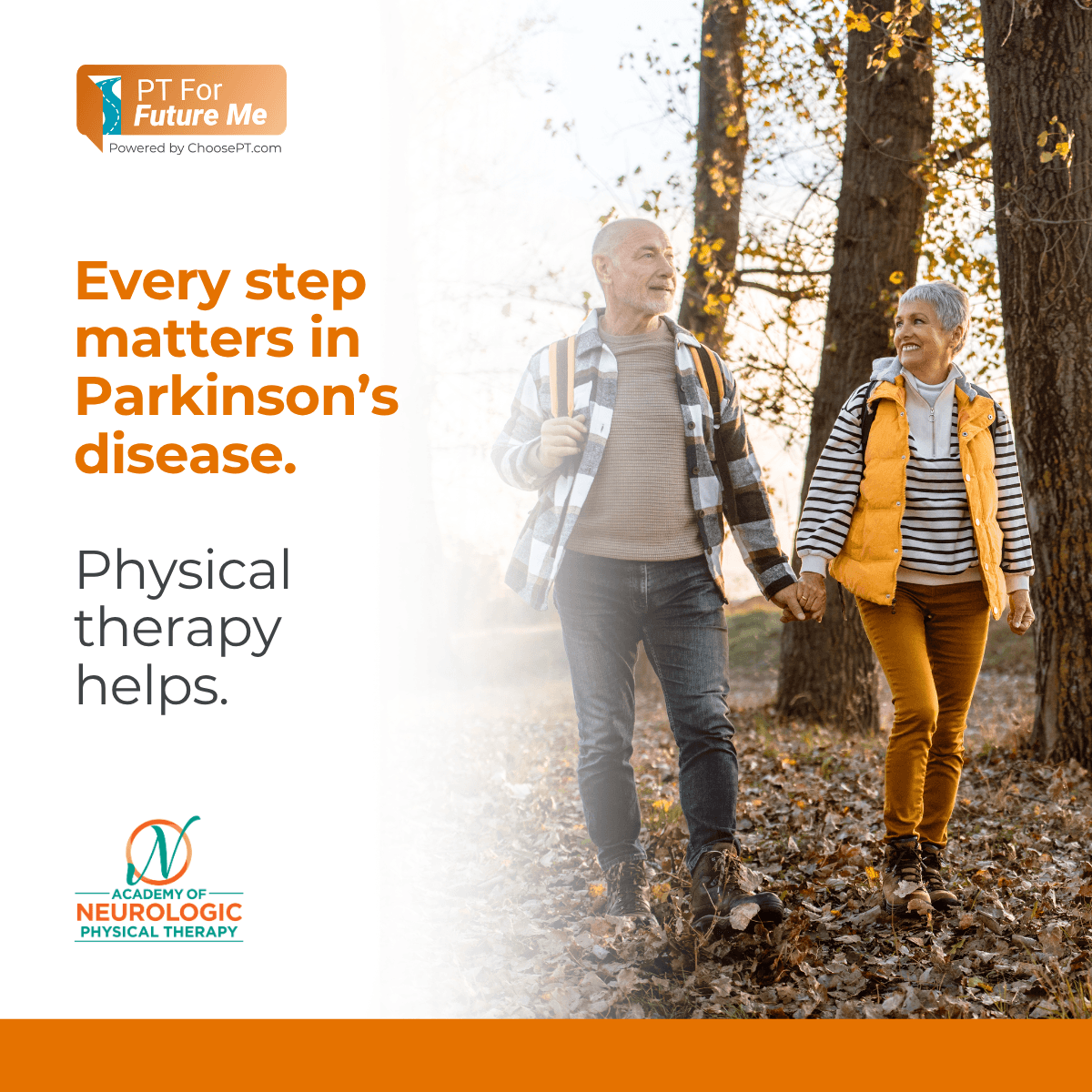
Every Step Matters in Parkinson’s Disease
Every step matters in Parkinson’s disease. Physical therapy helps.
Parkinson’s disease can affect movement, balance, walking, strength, coordination, and everyday activities.
Physical therapy can help people living with Parkinson’s disease work on mobility, balance, strength, walking, and strategies for managing movement challenges.
Because everyone’s experience is different, therapy should be individualized to the person’s abilities, needs, goals, and stage of disease.
The goal is to help people remain as active, safe, and independent as possible — because every step really does matter.
Strong Through Cancer Treatment and Beyond
Physical therapy: helping you stay strong through cancer treatment and beyond.
Cancer and its treatment can affect the body in many ways. People may experience changes in strength, endurance, balance, mobility, energy, or their ability to manage everyday activities.
Physical therapy can be part of a person’s care during treatment and recovery, helping address physical challenges and supporting safe participation in daily activities.
As with any therapy, the approach should be based on the individual’s health, treatment plan, abilities, and goals.
Because getting through treatment isn’t the only goal. Being able to move forward afterward matters, too.
Physical Therapy Across the Lifespan
Physical therapy isn’t just for a particular age group. Our bodies, activities, and health needs change throughout life — and PT can play a role at every stage.
The American Physical Therapy Association’s Physical Therapy Across the Lifespan resources explain how physical therapy can support movement and participation during four different stages of life.
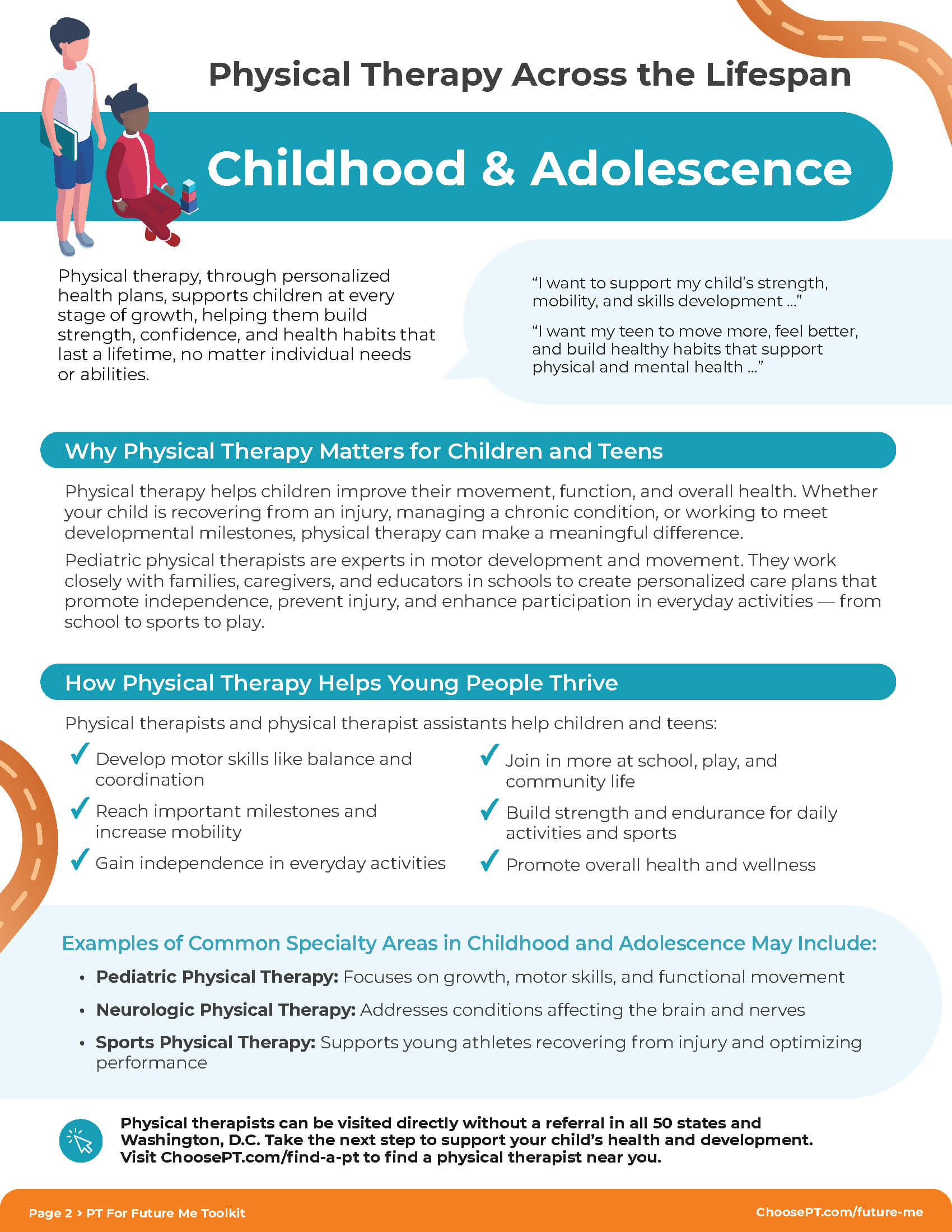
Childhood
Children are constantly learning how to move, from developing basic motor skills to participating in school, play, sports, and other activities.
Physical therapy can help address challenges with strength, balance, coordination, mobility, and physical participation so children can keep moving and doing the things that are important to them.
Click image to enlarge
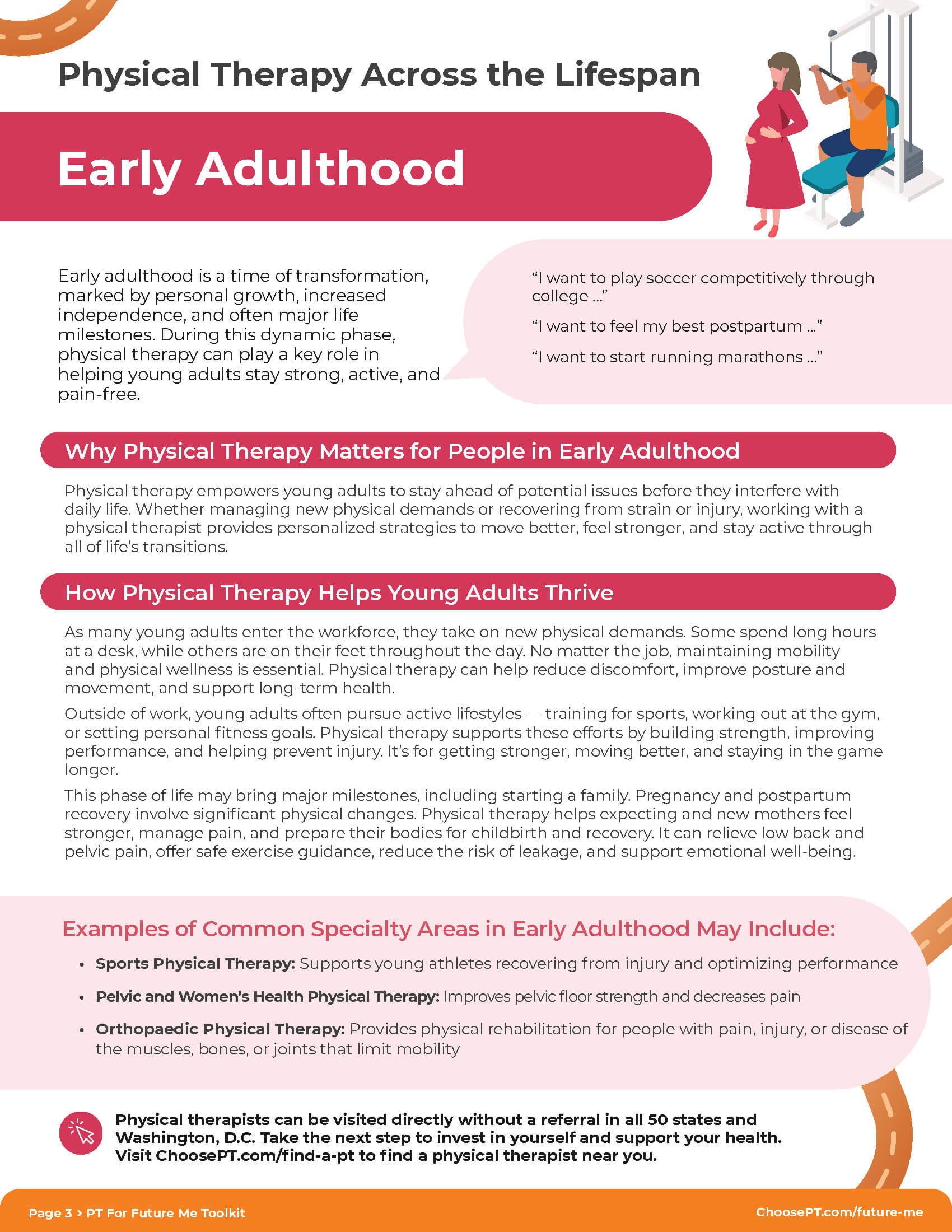
Early Adulthood
Early adulthood can bring new responsibilities — work, school, family, exercise, recreation, and everything in between.
Physical therapy can help address injuries and movement problems while also supporting an active lifestyle and helping people understand how they move and care for their bodies.
Click image to enlarge
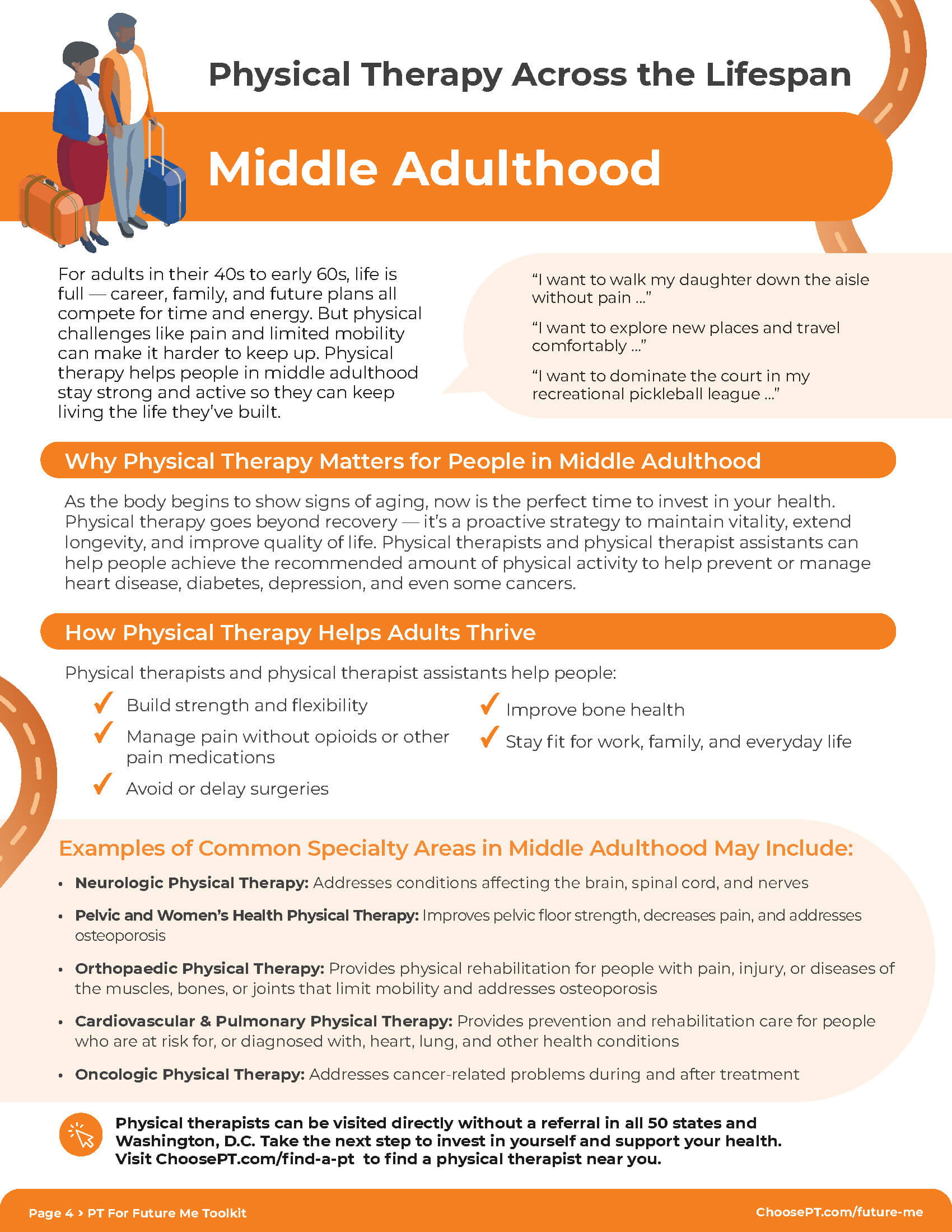
Middle Adulthood
As life gets busier, staying active and maintaining strength and mobility can become increasingly important.
Physical therapy can help manage pain and injuries, improve movement, build strength, and support the activities that keep you engaged in work, family, recreation, and everyday life.
Click image to enlarge
Older Adults
Getting older doesn’t mean giving up the activities you enjoy or accepting limitations as inevitable.
Physical therapy can help older adults improve or maintain strength, mobility, balance, and independence. It can also address factors that may contribute to falls and help people stay involved in the activities and relationships that make life meaningful.
Click image to enlarge
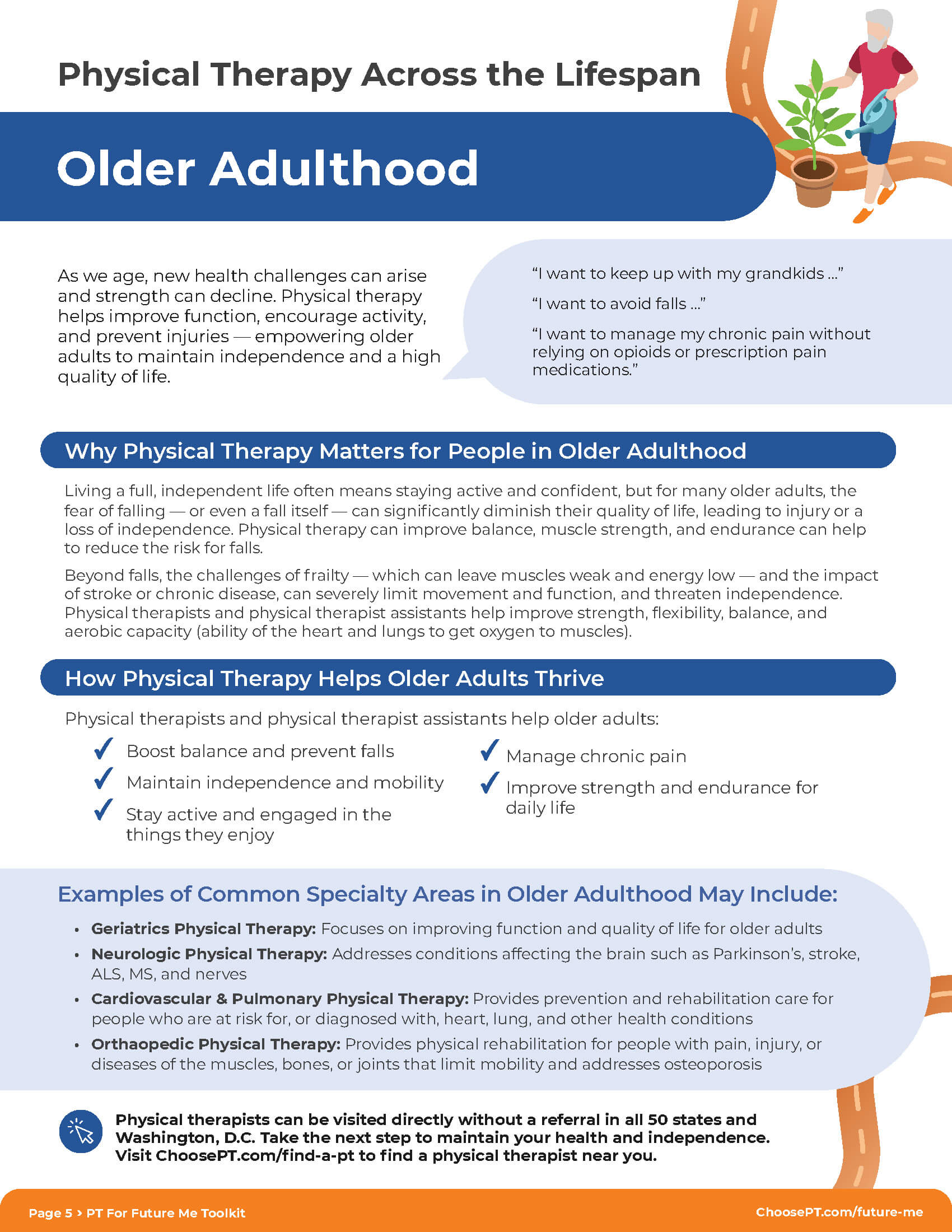
These educational resources are provided by the American Physical Therapy Association (APTA).
Your Future Self Is Worth the Investment
We all have a future self.
The things we do today can help influence how we move, participate, and live tomorrow.
For one person, that might mean being able to keep hiking. For another, it might mean getting back to work, playing with grandchildren, managing a chronic condition, recovering after an illness, or simply remaining independent at home.
Physical therapy can be part of that journey at many different ages and stages of life.
Don’t wait until movement becomes a problem before thinking about how to protect it.
If you’re experiencing pain, difficulty moving, weakness, balance problems, recovering from an illness or injury, or simply wondering whether PT could help you reach a particular goal, talk with your healthcare provider about whether physical therapy may be right for you.
Physical Therapy at Legacy Home Health Care
At Legacy Home Health Care, our physical therapists bring skilled care to patients in the comfort of their own homes.
Our therapy services are designed around the individual — their condition, their environment, their abilities, and the activities that matter to them.
Because when therapy happens where life happens, the goal isn’t just to improve movement.
It’s to help you keep moving through life.